From $0 to $4,100 MRR Building 6 Projects
How I went from zero to $4,100 MRR by building 6 projects, validating fast, learning from failures, and focusing on real market demand.
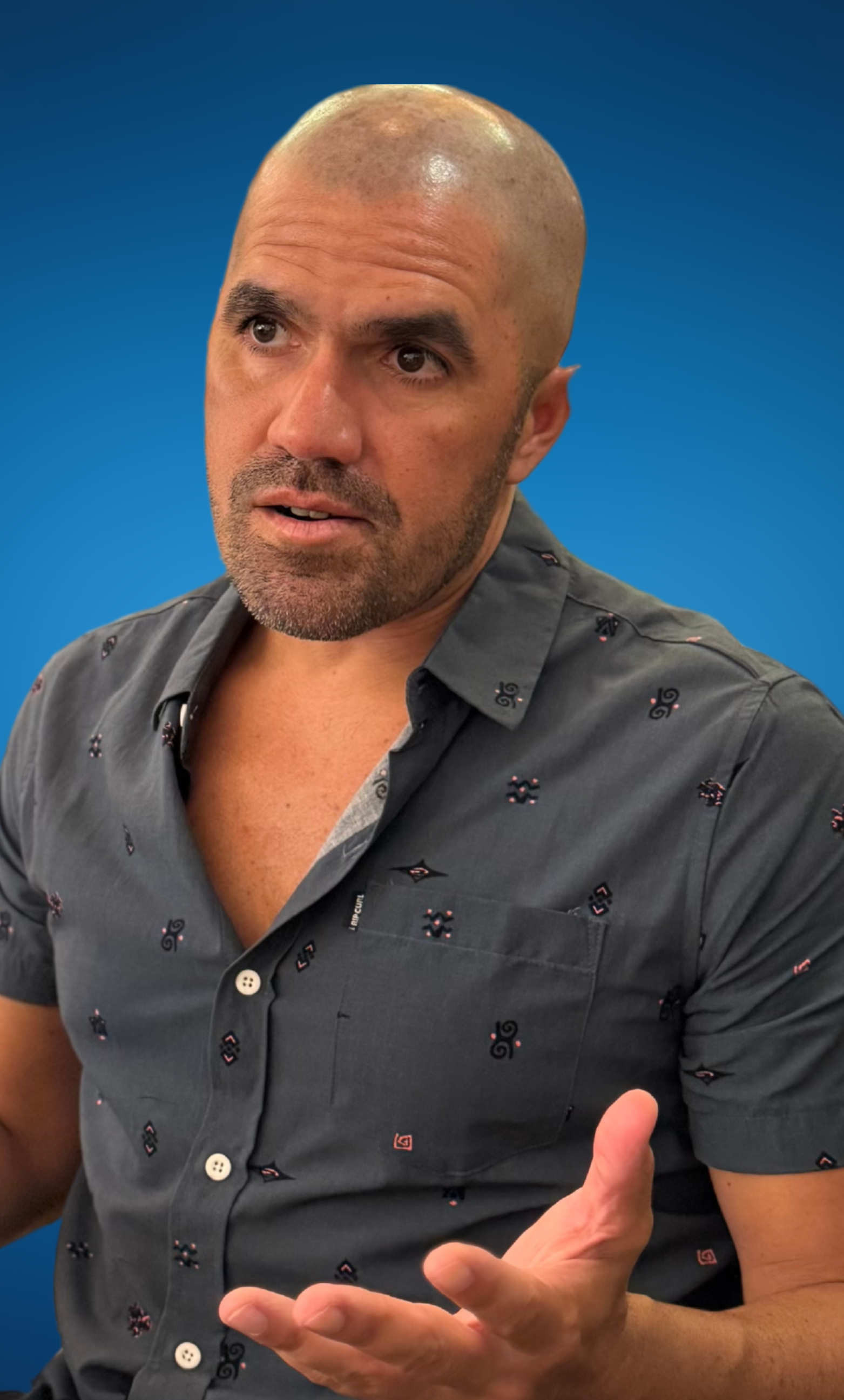

From $0 to $4,100 MRR: My Path Building 6 Projects
When people see a revenue number like $4,100 MRR, they usually imagine a straight line: one idea, one product, one launch, one success story. That was not my case.
My path was messy, practical, sometimes frustrating, and very Latin American in the best and hardest sense of the word. I did not build one perfect startup. I built six projects, each one teaching me something different about validation, distribution, pricing, operations, automation, and founder psychology.
Some projects made money fast. Some took longer than expected. Some looked promising but had weak economics. Others were boring on the surface but much better businesses underneath. Over time, all of that experience compounded into one thing that matters a lot in entrepreneurship: clarity.
In this article, I want to share the real journey behind going from zero to $4,100 in monthly recurring revenue, not as a motivational story, but as a practical breakdown of what actually worked, what failed, and what I would do again if I had to start from zero.
I am sharing this from direct experience building and operating products like Blogfy.io, OneJobs.io, Pro7.io, Manyfy.io, and also running traditional businesses like Proflimsa and consumer brands like You Minox. That mix gave me a perspective I value a lot today: software, services, ecommerce, and operations all teach different versions of the same lesson.
The first lesson: MRR is not built with ideas, it is built with repetition
At the beginning, I made the classic mistake: I thought the hard part was finding the “big idea.” Over time, I learned that the hard part is not ideation. The hard part is repeating the cycle of building, launching, selling, listening, improving, and staying consistent long enough for revenue to compound.
The truth is simple:
- One project can teach you product.
- Another can teach you sales.
- Another can teach you retention.
- Another can teach you margins.
- Another can teach you systems.
- Another can teach you what not to build again.
That is why I do not regret building multiple projects. Each one was part of the same business education, just paid in a different currency.
Why I built 6 projects instead of betting everything on one
This was not a master plan from day one. It was the result of curiosity, opportunity, and reality. Some ideas came from market observation. Others came from internal pain points. Others came from seeing how businesses in Latin America still operate with huge inefficiencies.
What pushed me to build multiple projects was this realization: the market gives better answers than your assumptions.
Instead of overcommitting emotionally to one concept, I started testing faster. Not recklessly, but pragmatically. I wanted to know:
- Will people pay?
- Will they pay again?
- Can I acquire customers without burning cash?
- Can this be automated?
- Can I keep this running without becoming a prisoner of the business?
That framework changed everything. It made me less romantic and more effective.
The 6-project path in simple terms
Without turning this into a vanity list, here is the simplified logic behind the projects that shaped my path:
| Project Type | Main Lesson | Business Insight |
|---|---|---|
| Content/SaaS tools | Distribution matters as much as product | SEO and niche positioning can compound slowly but powerfully |
| Job/productivity platforms | Users are not customers by default | You need a clear monetization path from the beginning |
| Agency/service operations | Cash flow loves services | Operational excellence can outperform “cool” ideas |
| Ecommerce/consumer brand | Brand trust drives conversion | Simple offers with strong positioning win |
| Automation-focused products | People pay for speed and convenience | Reducing friction creates immediate value |
| Internal systems turned products | Your own workflow pain can become a market offer | Founder-led validation is a strong starting point |
Each project added a layer. None of them alone explains the full $4,100 MRR. The number came from stacking learnings and revenue streams, then focusing on what had the healthiest signal.
Project 1: Learning that building is easy, getting users is not
One of my earliest hard lessons was discovering that shipping a product does not mean anyone cares. As a developer, it is dangerously easy to confuse progress with coding. You spend days or weeks polishing features, dashboards, flows, integrations, and micro-details that no one has validated.
I did that too.
I launched things I thought were useful, only to realize the market was not waiting for them. Not because the product was bad, but because I had skipped the uncomfortable part: talking to users early and selling before feeling ready.
This stage taught me to stop asking, “Can I build it?” and start asking, “Who needs this badly enough to pay this month?”
That shift sounds small, but it changes how you build:
- You write landing pages before writing full systems.
- You test offers before adding features.
- You care about conversion more than architecture.
- You focus on one pain point instead of ten possibilities.
That mindset became one of the foundations behind later revenue.
Project 2: Validation through real demand, not compliments
There is a trap many founders fall into: people say your idea is “interesting,” “useful,” or “cool,” and you interpret that as validation. It is not.
Validation is payment, usage, retention, or a very strong buying signal.
When I started tightening my validation process, I began looking for stronger proof:
- People booking demos
- People asking pricing questions
- People comparing plans
- People using the product repeatedly
- People referring others
- People complaining when something breaks
That last one is underrated. If users complain when the product is unavailable, it means your tool matters to their workflow.
One of the biggest reasons I was able to move toward recurring revenue was that I stopped chasing applause and started chasing behavioral proof.
The market does not reward what sounds good. It rewards what solves an urgent problem consistently.
Project 3: Why services gave me speed and software gave me scale
Something I learned from operating both digital products and traditional businesses is that services and software play different roles in a founder journey.
Services usually help you generate cash faster. Software usually helps you scale margins later, if you get distribution right.
This became very clear to me through businesses like Proflimsa, where operations, trust, execution quality, and client relationships matter a lot. In service businesses, if you solve a real problem and execute well, cash flow can happen relatively quickly. But scaling requires systems, people, quality control, and process discipline.
In software, the opposite can happen. You can build something scalable in theory, but spend months without meaningful revenue because distribution is weak.
That is why I stopped thinking in extremes. I no longer see service businesses as “less interesting” than SaaS. In many cases, services are the best school for entrepreneurship because they force you to understand:
- Customer expectations
- Margins
- Delivery
- Retention
- Team coordination
- Reputation management
And once you understand those, you build software with much better business intuition.
Project 4: The power of niche positioning
Another major turning point in my path was understanding that broad markets are seductive but expensive. Niche markets are smaller, but they are easier to reach, easier to message, and easier to monetize.
When you say, “This is for everyone,” what the market often hears is, “This is not specifically for me.”
Niche positioning helped me in multiple ways:
- Clearer copywriting
- Better SEO targeting
- Higher conversion rates
- More relevant outreach
- Stronger word of mouth
This also applies outside software. With You Minox, for example, the value is not “general beauty.” It is a specific transformation tied to beard growth and confidence. That clarity makes marketing easier. People understand the offer immediately.
In software and digital products, the same principle applies. The more specific the pain, the easier the sale.
Project 5: Automation increased profit more than features did
There was a period where I thought growth would come from adding more features. Sometimes that is true, but often it is not the highest-leverage move.
In several of my projects, what improved the business most was not feature expansion. It was automation.
Automation helped me reduce:
- Manual onboarding work
- Repetitive customer support tasks
- Internal admin processes
- Follow-up delays
- Operational errors
And it increased:
- Speed of delivery
- Customer experience consistency
- Founder focus
- Profitability
- Capacity to manage multiple projects at once
This matters because MRR is not just about top-line growth. It is also about how efficiently that revenue is produced and maintained. A project making $800 MRR with low operational drag can be healthier than one making $1,500 MRR but consuming all your time.
That is one reason I increasingly value businesses that are not just monetized, but operationally sane.
Project 6: Learning to focus on what compounds
One of the hardest founder skills is deciding what to ignore.
When you build multiple projects, opportunities are everywhere. New features, side ideas, partnerships, redesigns, experiments, channels, integrations. The problem is that not all movement is progress.
What helped me go from scattered activity to recurring revenue was learning to identify what actually compounds over time:
- SEO content that keeps bringing traffic
- Products with recurring billing
- Systems that reduce manual work
- Customer segments with low churn
- Offers with clear ROI
- Channels that can be repeated predictably
Once I started prioritizing compounding assets over exciting distractions, the business became more stable.
How the $4,100 MRR actually happened
It did not happen from one viral launch or one lucky moment. It came from a combination of:
- Multiple validated offers instead of one fragile bet
- Recurring pricing models where possible
- Fast iteration based on user behavior
- Organic acquisition through SEO, direct outreach, and niche positioning
- Operational systems that protected my time
- Better judgment about what to keep, improve, or kill
That last point is underrated. Revenue growth is not only about creating. It is also about eliminating. Some things need to be cut so stronger things can grow.
I also want to be honest: the number itself is meaningful, but what matters more is what it represents. It means I built a base of recurring income from projects that started as ideas, tests, and imperfect launches. That is important because once you prove you can do it once, you stop seeing revenue as magic. You start seeing it as a system.
The mistakes that slowed me down
1. Building too much before selling
This is probably the most common founder mistake, especially for technical people. I lost time building things users had not fully asked for.
2. Confusing interest with demand
Positive feedback feels good, but it does not pay invoices. I had to learn to measure buying intent, not just reactions.
3. Underestimating distribution
A decent product with strong distribution usually beats a great product with weak distribution. This was one of the most expensive lessons.
4. Holding onto weak ideas for too long
Sometimes persistence is good. Sometimes it is ego wearing a productivity costume. I learned to look at traction more objectively.
5. Not valuing boring businesses enough
Some of the best business models are not flashy. They are clear, useful, profitable, and repeatable. I respect that much more now.
What I would do if I had to start again from zero
If I had to rebuild from zero today, I would follow a much simpler playbook:
- Choose a painful niche problem with clear economic value.
- Create a landing page fast and test messaging before building deeply.
- Talk to potential customers early and ask buying questions, not opinion questions.
- Launch a minimum useful version, not a polished dream version.
- Charge early, even if pricing is imperfect.
- Measure retention and manual workload from the start.
- Automate the repeated parts as soon as the process proves useful.
- Double down only when usage and willingness to pay are both real.
This approach is less glamorous, but much more effective.
Advice for entrepreneurs in Latin America
Building in Latin America has challenges: lower purchasing power in some markets, payment friction, trust barriers, slower adoption in certain sectors, and operational complexity. But it also has huge opportunities.
There are still many industries with outdated workflows, weak digital experiences, and poor customer service. That creates room for founders who can execute well.
My advice is this:
- Do not wait for perfect conditions.
- Do not copy Silicon Valley blindly.
- Build with local reality in mind.
- Solve practical problems.
- Respect cash flow.
- Use automation to stay lean.
- Learn sales, not just product.
In our region, founders who combine execution, adaptability, and commercial instinct can build very solid businesses.
The real metric behind the revenue
If I am honest, the most important metric behind the $4,100 MRR was not revenue. It was capability.
By building six projects, I developed skills that now compound across everything I do:
- I validate faster.
- I write clearer offers.
- I spot weak business models earlier.
- I understand operations better.
- I automate sooner.
- I sell with more confidence.
- I recover from failed experiments faster.
That is what makes the journey valuable. The money matters, of course. But the deeper asset is becoming the kind of founder who can repeatedly turn market problems into revenue.
Final thoughts
Going from zero to $4,100 MRR was not about genius. It was about volume of attempts, speed of learning, practical validation, and staying in the game long enough for the right things to click.
I did not build six projects because I wanted to look busy. I built them because each one helped me get closer to what actually works. Some gave me revenue. Some gave me scars. Some gave me systems. All of them gave me leverage.
If you are building right now, my recommendation is simple: stop chasing the perfect startup story. Start chasing real demand, real users, real payments, and real operational clarity.
That is how small projects become real businesses.
And that is how zero starts turning into recurring revenue.